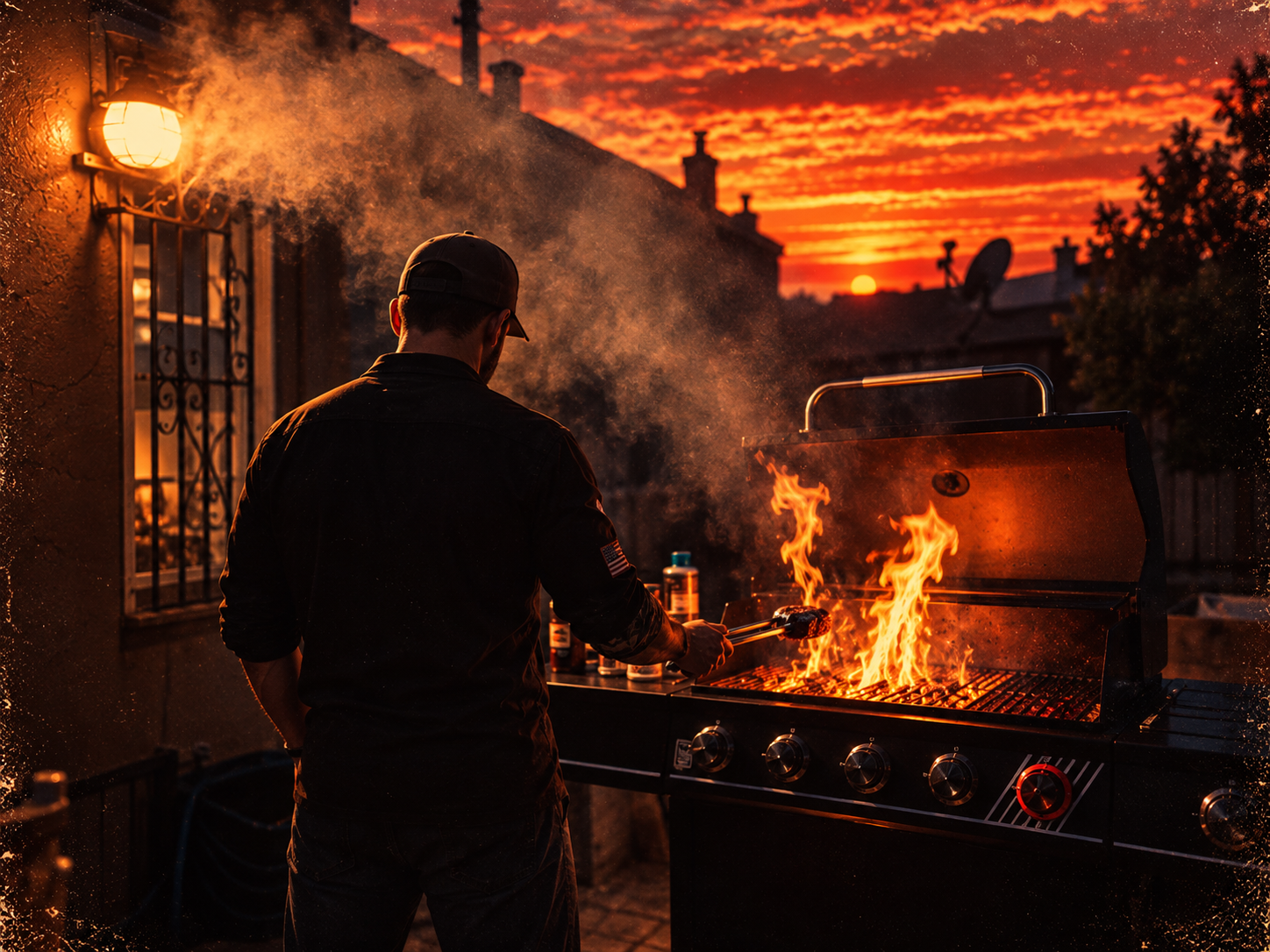
ProSmoke now has a large showroom at its Banbury HQ, filled with American smokers and barbecue equipment, while the business has moved beyond selling the hardware into teaching people how to cook on it properly.
A hobby that began with trying to find the right smoker has ended up with a 500-gallon pit sitting in Oxfordshire and brisket on the fire.
WHEN THE BARBECUE GETS SERIOUS
ProSmoke built its business by developing relationships with American manufacturers and bringing their equipment into Britain.
For anyone whose idea of barbecue has moved beyond burgers over charcoal, the appeal is fairly obvious. American offset smokers are built around a different kind of cooking: wood fire, smoke, low temperatures and enough time for a brisket to settle in for most of the day.
The machinery can be substantial too. A proper offset pit has rather more in common with a small locomotive than the barbecue your dad dragged out of the shed every July.
Owning one is only half the job, though, because several hundred kilos of steel will not rescue a badly managed fire.
LEARNING TEXAS BARBECUE IN BANBURY
ProSmoke’s Texas Barbecue Masterclass with Wilsons BBQ is a full day built around the cooking rather than simply admiring the equipment.
The menu runs through brisket, pork ribs, turkey, handmade smoked sausage, pickles, sides and sauces, while the teaching gets into the less glamorous but far more important business of running the fire.
Students learn how an offset smoker works, how to build and control the fire, how to manage several cooks at once and how Central Texas barbecue gets its results.
The demonstrations use a 500-gallon Primitive Pits offset smoker, which is the kind of machine that makes a bag of supermarket charcoal look as though it has wandered into the wrong rodeo.
Fire management is where the day earns its keep. Anybody can buy an impressive smoker and stand beside it holding tongs; keeping a clean wood fire running steadily for hours while several cuts of meat move towards dinner requires rather more trailcraft.
SIX HOURS OF SMOKE, THEN YOU EAT
The class runs from 10am until 4pm at ProSmoke’s Banbury HQ and is limited to a maximum of 25 people.
No previous experience is required, so beginners can learn alongside people who already know their way around a smoker. That makes sense for this kind of cooking because even somebody comfortable around a barbecue may have never spent a day controlling a live wood fire in an offset pit.
Everything being cooked during the class eventually becomes the meal, which gives the teaching a fairly convincing final exam.
After several hours learning about bark, smoke, temperature and timing, you sit down and eat the brisket, ribs, turkey and sausage you have spent the day watching come together.
Previous attendees have described picking up practical tips, eating extremely well and leaving with a much stronger understanding of the process. The advice to arrive hungry sounds worth taking seriously.
TEXAS, VIA BANBURY
The interesting part of ProSmoke’s story is how normal this sort of thing is becoming in Britain.
Not long ago, anyone wanting to get properly into American barbecue might have been learning from books, television, trips to the States and a fair amount of trial and error at home. Serious American smokers were difficult enough to source that Giles ended up creating a company to bring them here.
Now there is enough appetite for the culture around the cooking that a specialist business in Oxfordshire can fill a showroom with offset pits and spend entire days teaching people how to run them.
Nobody needs to pretend Banbury is somewhere outside Austin. The wood still burns the same way, the brisket still takes its own sweet time and a hungry crowd will forgive the postcode once the smoker opens.
ProSmoke began because Giles wanted better access to American barbecue equipment in Britain. The business he built now gives other people the smoker, the fire knowledge and a place to learn what to do with both.
For anybody who has looked at a proper Texas pit and thought I could get into that, there is now considerably less stopping them.